[Archive Entry 017]
Tungsten, Ceramic or Stainless Steel: Which Men's Ring Material Actually Holds Up
Below the precious metals sits a second tier of materials that most men actually end up choosing from: tungsten carbide, technical ceramic, and stainless steel. They are usually presented as roughly interchangeable budget options. They are not. They differ by a factor of two in density, by three points on the hardness scale, and — the one that matters most to some people — by whether they contain nickel at all.
Here is what separates them, and which one is right for which hand.
The short answer
- Tungsten carbide — maximum density and maximum scratch resistance. The choice if you want the object to be felt and to stay unmarked.
- Technical ceramic (zirconia) — no metal content at all, non-conductive, nearly as hard. The choice if skin sensitivity or electrical work rules metal out.
- Stainless steel — the cheapest of the three and the softest. It contains nickel, which is the most common contact allergen in jewellery.
How they compare
| Property | Tungsten Carbide | Technical Zirconia (Ceramic) | 316L Stainless Steel |
|---|---|---|---|
| Density | 15.6 g/cm³ | 6.0 g/cm³ | ~8.0 g/cm³ |
| Hardness (Mohs) | 9.0 | 8.5+ | ~5.5–6.0 |
| Scratch resistance | Marked only by diamond and industrial abrasives | Very high; resists everyday contact | Low; visible wear within months of manual work |
| Metal content | Metal carbide | None | Iron, chromium, nickel (typically 10–14%) |
| Electrical conductivity | Conductive | Non-conductive | Conductive |
| Failure mode | Fractures cleanly under extreme load | Fractures; can chip on a hard edge-on drop | Bends and deforms |
| Resizable | No | No | Marginally, by a specialist |
| Typical market position | Mid to upper | Mid | Entry level |
Full parameters are documented on The Standard.
Density: what the numbers feel like
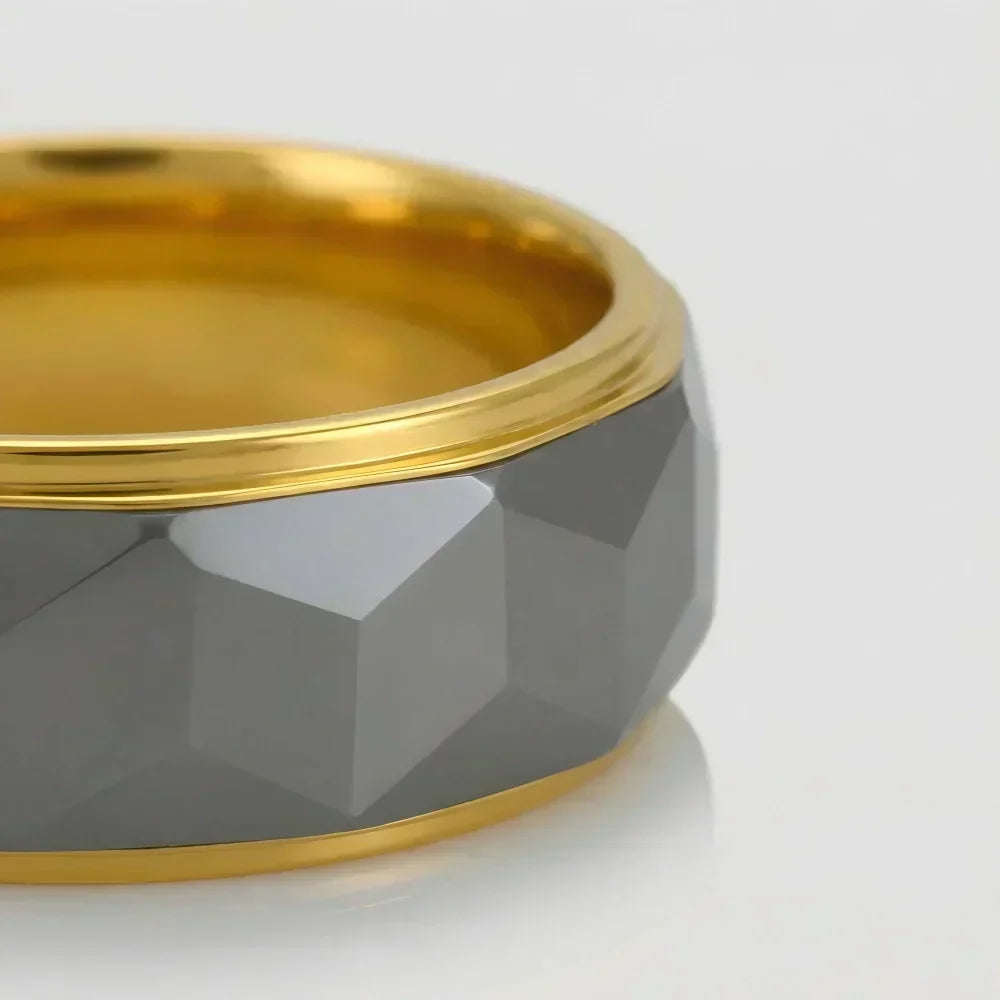
Tungsten carbide is roughly two and a half times denser than ceramic and about twice the density of stainless steel. Our pieces are hand-finished rather than machine-produced in identical runs, so exact weights vary by one to three grams even within the same design and size. As measured examples: The Linear Divide at size 12 comes in around 14.3 g, and The Solar Fracture at size 14 around 15.2 g.
A ceramic band of the same dimensions would sit near six grams, and a stainless one near eight. Whether that difference is an advantage depends entirely on what you want the object to do. Mass is either a constant physical reference or a nuisance, and only you know which.
The nickel question
This is the practical reason many men end up switching materials, and it is worth stating plainly. 316L stainless steel is corrosion-resistant and medical-grade for many applications, but it contains nickel — typically ten to fourteen percent. Nickel is the most common contact allergen in jewellery, affecting somewhere around one in ten people. For most wearers a 316L band is fine. For a nickel-sensitive wearer it is not, and no amount of polishing changes that.
Tungsten carbide is chemically stable, but the binder used to sinter it is not always. Where someone reports a "tungsten allergy," the cause is almost always cobalt used as a cheap binding agent at the low end of the market — it oxidises against sweat and can cause contact dermatitis. Technical ceramic sidesteps the whole category: there is no metallic allergen present to react to. The full explanation is in Archive Entry 015.
A note on Damascus steel
Forged Damascus is steel, but it is not the same proposition as a plain stainless band. Our Damascus work uses a 316L matrix that is hand-forged, folded repeatedly and deep acid-etched, then built onto a tungsten carbide chassis that carries the structural load and the mass. The visible striations are layer boundaries running through the material, not a surface print. That is a different object from a spun stainless band, and it is priced accordingly — see DAMASCUS STRUCTURE.
Frequently asked questions
Is ceramic or tungsten better for a ring?
Tungsten carbide is denser and marginally harder; technical ceramic is around sixty percent lighter, non-conductive and contains no metal. If weight is the point, tungsten. If skin sensitivity or electrical work is the constraint, ceramic.
Do stainless steel rings turn your finger green?
316L stainless is corrosion-resistant and does not typically discolour skin the way copper alloys do. The more common issue is nickel sensitivity causing irritation rather than staining.
Will a ceramic ring break if I drop it?
It can chip if it lands edge-on onto tile or concrete — the same trade-off that comes with any very hard, low-flexibility material, tungsten included. In normal wear it holds up well.
Which of the three scratches least?
Tungsten carbide at Mohs 9.0, with technical ceramic close behind at 8.5+. Stainless steel at roughly Mohs 5.5–6.0 is the outlier — it accumulates visible marks within months of hands-on work.
Can any of them be resized?
Stainless steel can be adjusted marginally by a specialist. Tungsten carbide and ceramic cannot be resized at all. We handle it through Protocol 01 — Complimentary Archive Exchange: one free replacement in the correct size, and you keep the original. Measure first with the Structural Band Calibration Guide.
Which is safest to wear while working?
Ceramic does not conduct electricity, which matters for anyone near live circuits. Both ceramic and tungsten fracture cleanly under extreme pressure rather than crushing the finger. But no material prevents a degloving injury — for rotating machinery, ladders and heavy loads, remove any ring. See Archive Entry 011.
The steward's position
These three materials are not a price ladder with one correct answer at the top. They are three different specifications, and the right one depends on whether you are optimising for mass, for skin, or for cost.
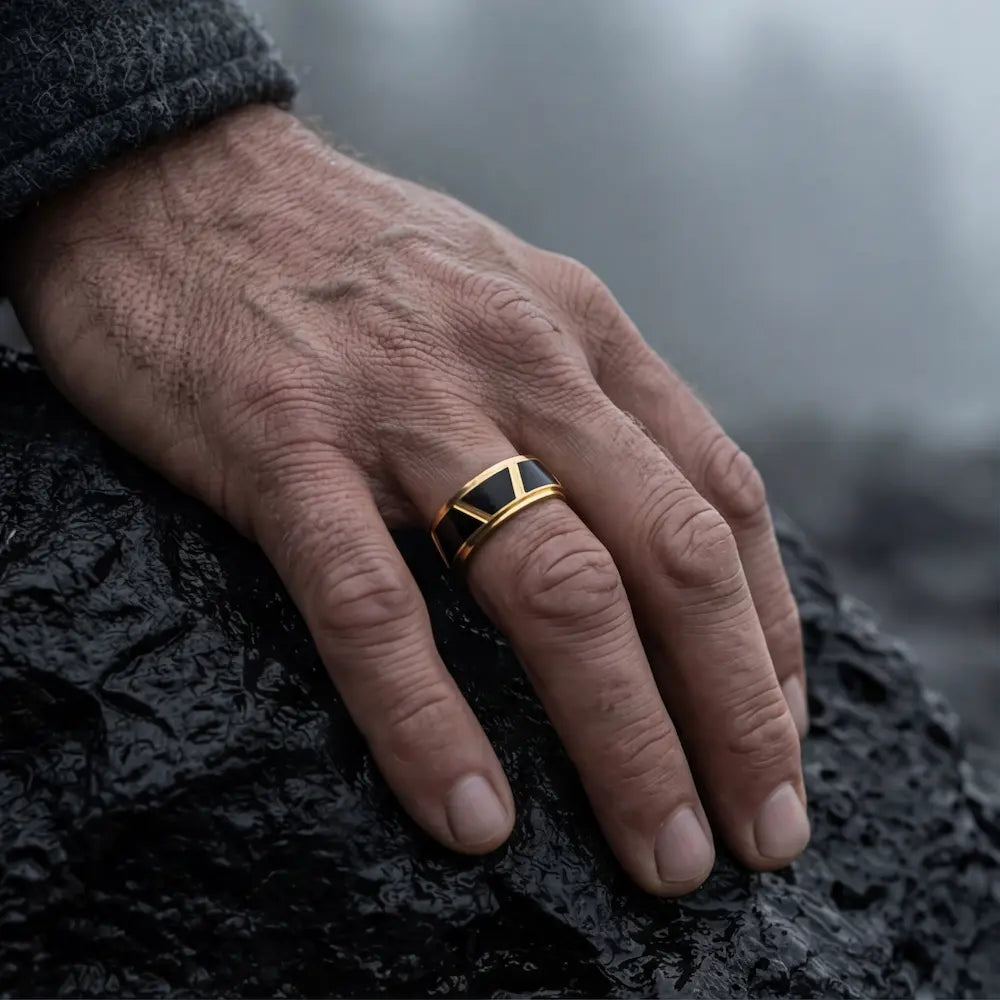
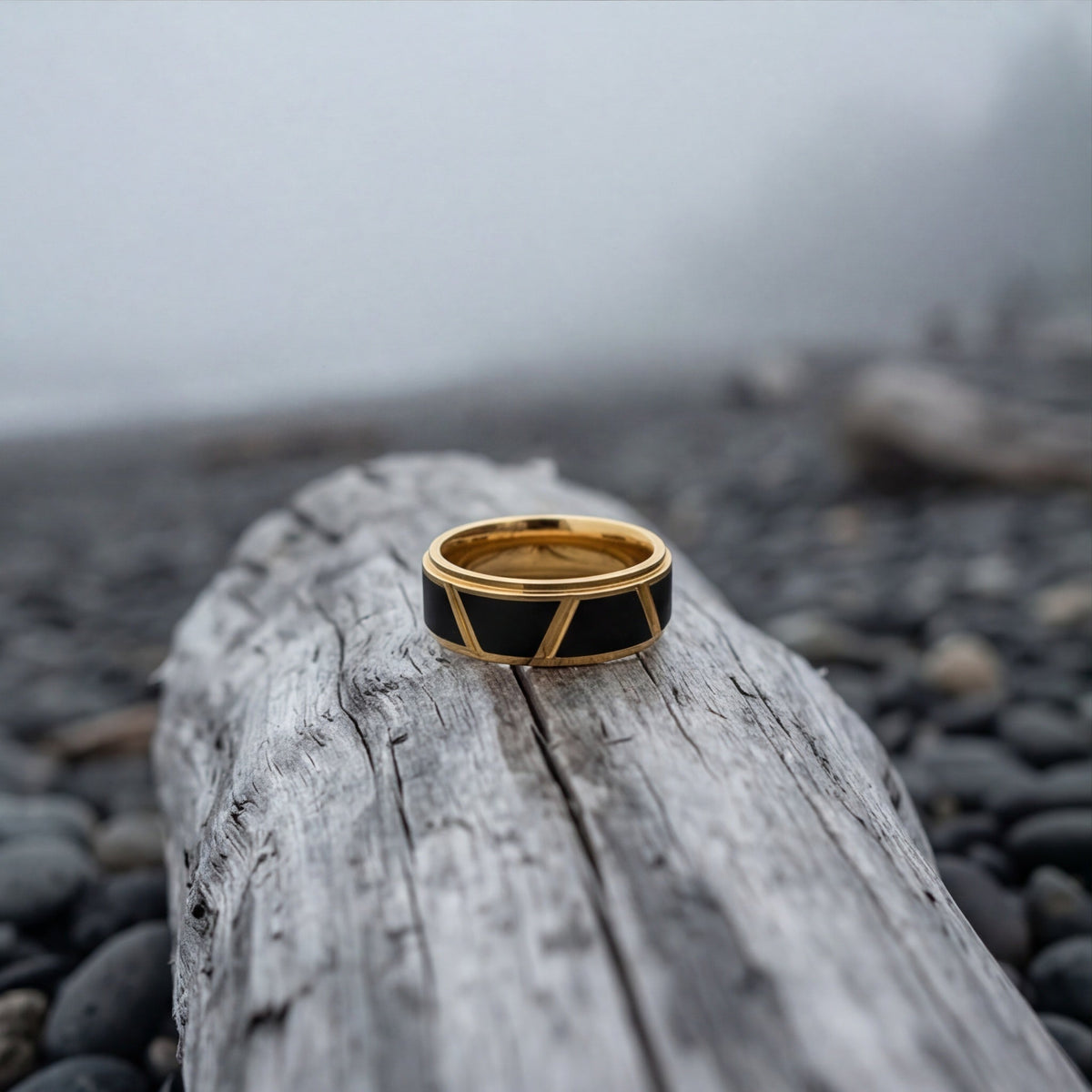
If it is mass: FORTITUDE, where The Shadow Monolith and The Argent Monolith are the plainest expressions of density. If it is skin or electrical safety: The Obsidian Prism is the ceramic piece in the current range.