[Archive Entry 011]
The Safety Protocol: Why Tungsten Rings Defy the Crushing Myth
A recurring question from mechanics, engineers and lifters: is it safe to wear a metal ring while working with my hands? The usual answer online is that tungsten carbide is so hard it becomes impossible to remove in an emergency, so you should stay with gold. That answer is backwards. It confuses hardness with removability, and it gets the failure mode of soft metal exactly wrong.
Here is what actually happens to each material under load, and what an emergency room actually does.
Can a hospital remove a tungsten ring?
Yes, and usually faster than a gold one. A tungsten carbide band cannot be cut with a standard jeweller's ring saw, which is where the myth comes from. But medical teams do not cut tungsten — they crack it. Standard locking pliers (vice grips) are placed on the outside of the band and pressure is applied gradually. The ring fractures cleanly, typically in well under a minute, and comes away in pieces.
There is no sawing, no heat generated against the skin, and pressure on the finger is released the moment it breaks. Compare that with a crushed gold band, where a rotary ring cutter has to grind through metal that has already deformed around a swelling finger — several minutes of contact with the injury, generating friction and heat.
Why soft metal is the greater risk under a crushing load
The safety of a ring in a high-impact event is decided by how the material responds to force, not by how hard it is.
- Gold and silver deform. Under a crushing load they flatten and wrap tighter around the bone. That creates a tourniquet effect, restricts blood flow, and embeds metal into tissue that is already swelling. The ring stays on, and it keeps squeezing.
- Tungsten carbide fractures. At Mohs 9.0 hardness it has very low tensile flexibility. It holds its geometry until the load exceeds its limit, then it breaks and releases the finger. The apparent weakness — brittleness — is what stops the ring becoming a clamp.
How the materials compare
| Material | Density | Hardness (Mohs) | Behaviour under crushing load | Emergency removal |
|---|---|---|---|---|
| Tungsten Carbide | 15.6 g/cm³ | 9.0 | Holds shape, then fractures cleanly | Cracked with locking pliers, under a minute |
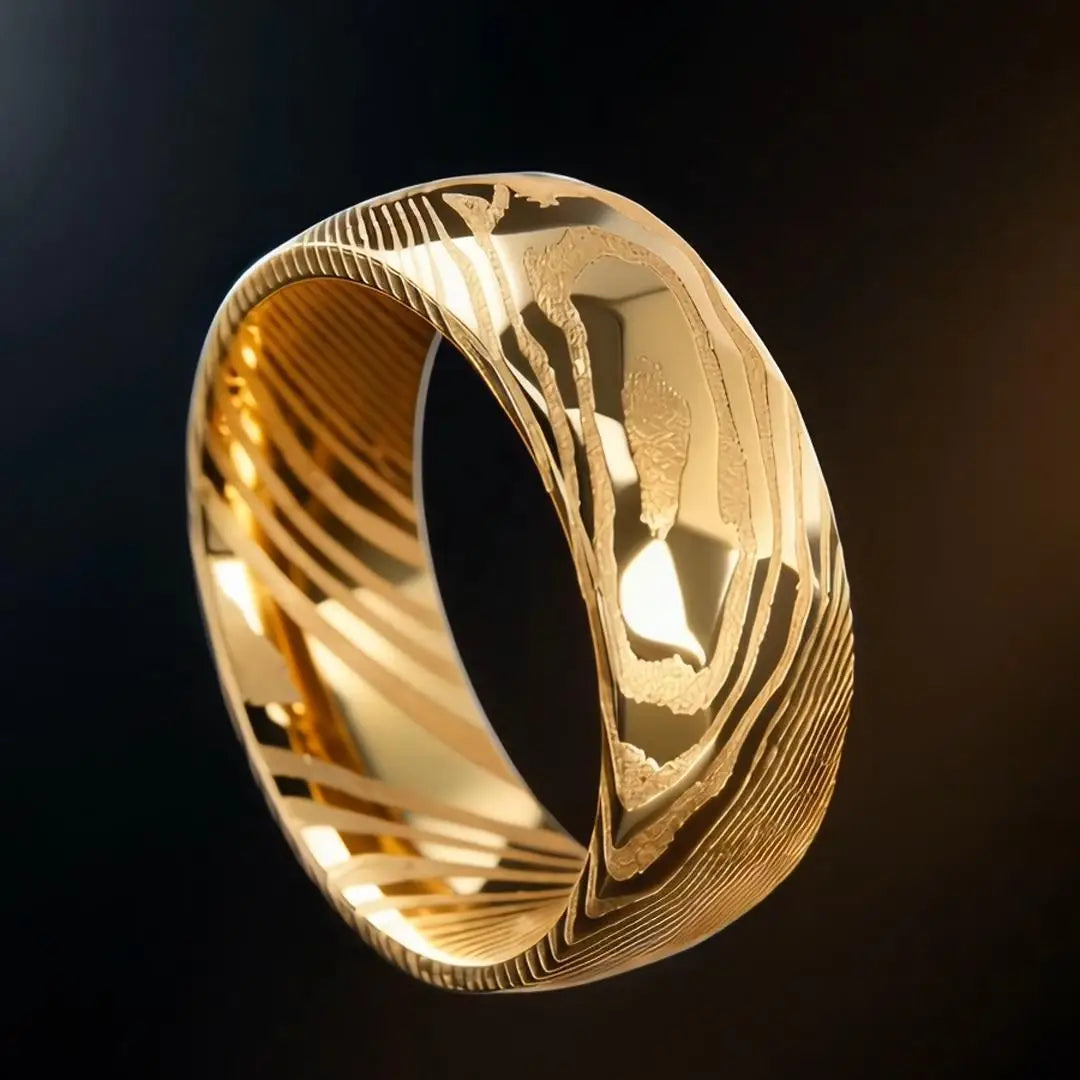
| 18K Gold | 15.5–15.9 g/cm³ | 2.5–4.0 | Flattens and tightens around the finger | Cut with a rotary ring cutter, several minutes |
| Titanium | ~4.5 g/cm³ | 6.0 | Bends, resists cutting | Cut, but slower than gold |
| Technical Zirconia (ceramic) | 6.0 g/cm³ | 8.5+ | Fractures cleanly | Cracked, similar to tungsten |
Full material parameters are documented on The Standard.
When you should take any ring off
Fracture behaviour is not a licence to keep a ring on through anything. There are tasks where no metal band belongs on the hand, and we will not pretend otherwise:
- Live electrical work. Tungsten carbide conducts. Remove it.
- Rotating machinery, ladders, and heavy loads that can catch a band. Degloving injuries are caused by a ring catching on something while the hand keeps moving. No material prevents that — the material only determines what happens after.
- Heavy barbell work, where the bar can pin a band against the finger repeatedly.
For those specific tasks, take the ring off. We cover where silicone genuinely belongs, and where it does not, in Archive Entry 014.
Frequently asked questions
Will a tungsten ring shatter if I drop it?
Not from normal handling. It can chip or crack if it lands edge-on onto a hard surface such as tile or concrete, which is the trade-off for Mohs 9.0 scratch resistance. Structural fracture under normal accidental use is covered by Protocol 03 — Aura Resilience Guarantee, our lifetime structural replacement.
Does a tungsten ring scratch?
Very little. At Mohs 9.0 the only common materials that will mark the surface are diamond and industrial abrasives. This is the practical difference from a gold band, which picks up visible wear within months of manual work.
Can a tungsten ring be resized?
No. The same hardness that makes it near-indestructible makes it resistant to conventional resizing, which relies on heating and stretching soft metal. Sizing is handled instead through Protocol 01 — Complimentary Archive Exchange: one free replacement in the correct size, and you keep the original. Measure first with the Structural Band Calibration Guide.
Is tungsten heavier than gold?
Tungsten carbide is approximately 15.6 g/cm³, close to 18K gold by density. The difference you feel is in how the mass is distributed across a wider structural profile rather than in the raw number.
Is tungsten carbide safe against skin?
Tungsten carbide and a Vacuum Ion-Deposition (PVD) gold surface are both chemically stable in normal wear. Where people report a reaction to a cheap tungsten ring, the usual cause is cobalt used as a low-cost sintering binder. For sensitive skin, Technical Zirconia removes the metal variable entirely — see Archive Entry 015.
The steward's position
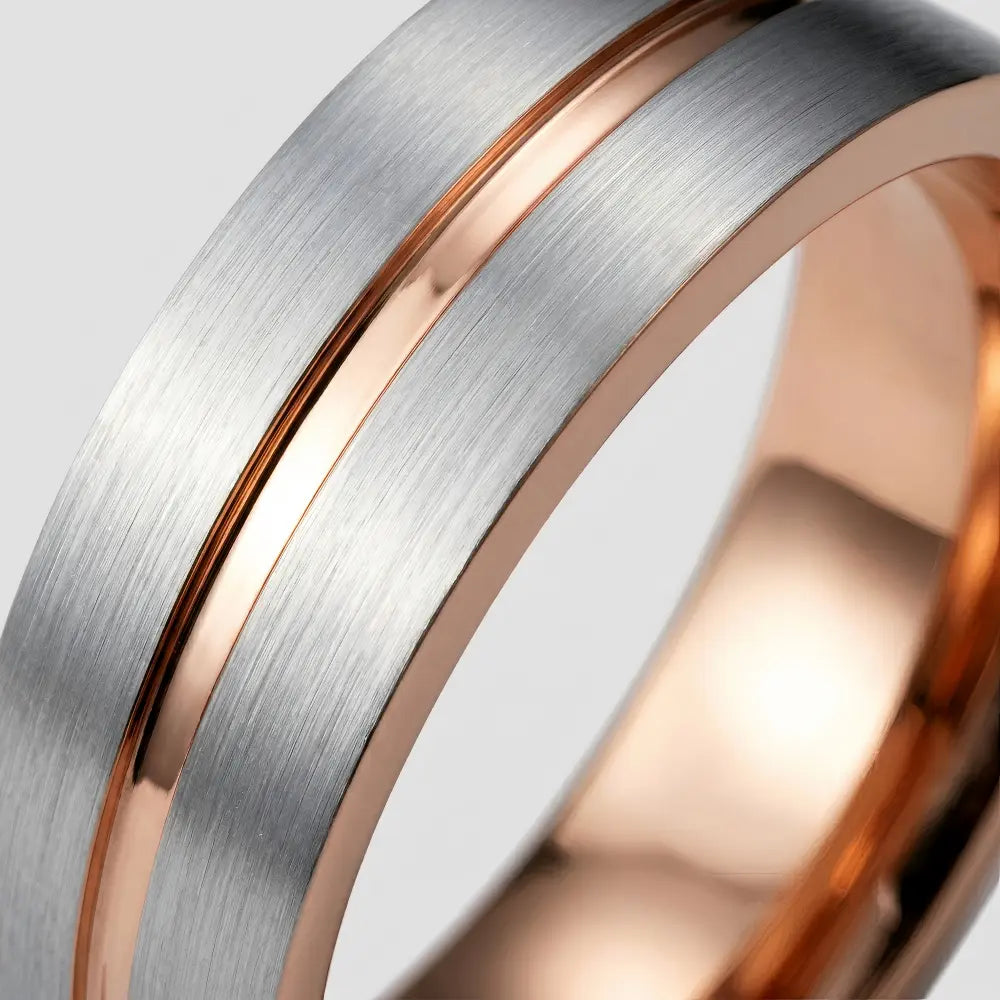
You do not need a band that bends around your finger under load, and you do not need to give up the object entirely. A high-density tungsten core is unyielding in daily wear and designed to break before it compromises the hand that builds. Every band in the FORTITUDE archive is engineered to that principle, including The Rose Meridian.