[Archive Entry 012]
The Autonomous Anchor: Deconstructing the Ring Finger Myth
There is an assumption that a heavy band belongs on the left ring finger and nowhere else — that a ring is a status broadcast about your relationship rather than an object you chose. Aura Brilliant does not design symbols of union. We engineer structural objects, and where you put one is a decision about proportion, grip and intent.
That said, the conventions exist and they are worth knowing before you ignore them. Here is what each position actually signals, and the practical constraints that matter more than the symbolism.
What does each finger mean?
Ring finger
In most of Western Europe, North America and Australia, the left ring finger indicates marriage. In Germany, Russia, India, Greece, Norway, Poland and much of Eastern Europe, the same signal sits on the right hand. If you travel or work internationally, this is the one position where the meaning genuinely changes underneath you.
Index finger
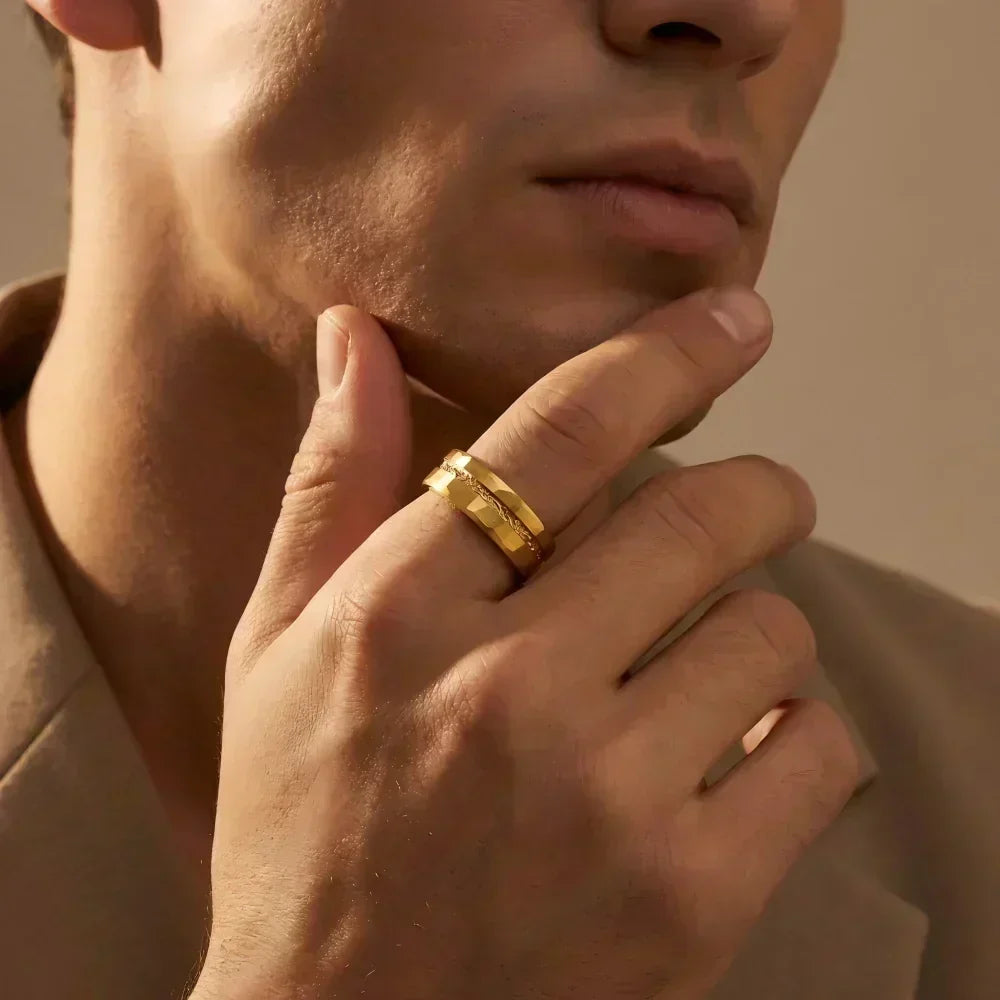
Historically the position of authority. Signet rings and seals were worn here because the index finger pressed the wax — the ring was a working tool, not decoration. It remains the most visible position in conversation, since the index leads almost every hand gesture. A heavy band here reads as deliberate.
Middle finger
The most structurally central position, and the one that carries weight most comfortably. Historically associated with balance and responsibility. It is also the safest place to start if you have not worn a ring before — prominent, without carrying a specific social meaning.
Thumb
Traditionally linked to wealth and force of will; archers wore thumb rings as functional equipment. Practically, the thumb takes the widest bands well and is the least likely position to be misread as a relationship signal. It also demands the largest size — see below.
Little finger
The traditional home of the family signet and, in some professions, the qualification ring. It suits narrower profiles; a heavy 8mm band on the little finger tends to look out of proportion and interferes with grip.
Which hand?
Beyond the marriage convention, the practical answer is your non-dominant hand. That hand takes fewer impacts, spends less time gripping tools and steering wheels, and puts less friction on the band. If you write, work or lift with your right hand, a band on the left simply goes longer between marks. Fingers on the dominant hand also tend to measure slightly larger.
Width, weight and proportion
Position and profile have to be decided together. A high-density band at 15.6 g/cm³ is felt differently depending on where it sits.
| Position | Suits | Sizing note | Notes on daily wear |
|---|---|---|---|
| Thumb | Wide profiles, 8mm and above | Typically 2–3 sizes larger than the ring finger | Very stable; noticeable when gripping |
| Index | 6–8mm | Usually 0.5–1 size larger than the ring finger | Highest visibility; contacts surfaces often |
| Middle | 6–8mm | Usually the largest of the four fingers | Most comfortable position for mass |
| Ring | 4–8mm | Reference measurement | Least interference with grip |
| Little | 4–6mm | Typically 2–3 sizes smaller | Wide bands read out of proportion here |
One rule holds across all positions: wider bands need a larger size than narrow ones, because more of the band is in contact with the finger. Measure the finger you actually intend to wear it on, not the one you happened to have sized years ago. The Structural Band Calibration Guide covers the method.
Sizing cannot be corrected later
This matters more here than with a gold band. Tungsten carbide at Mohs 9.0 cannot be resized by conventional heating and stretching, so choosing the wrong finger is not something a jeweller can fix afterwards. We handle it instead through Protocol 01 — Complimentary Archive Exchange: one free replacement in the correct size, shipped at no cost, and you keep the original piece.
Frequently asked questions
Can a man wear a ring on any finger?
Yes. The only position carrying a specific and widely-read social meaning is the ring finger, and even that varies by country. Every other position is a styling decision.
What does a ring on the right hand mean for a man?
In the United States and most of Western Europe, nothing specific — it reads as a personal choice. In Germany, Russia, Greece, Norway, Poland and India, the right ring finger is where a wedding band is worn.
What size is a thumb ring compared to a ring finger?
Usually two to three sizes larger. Do not order a thumb ring based on a ring-finger measurement; measure the thumb directly.
Should a heavier ring go on a specific finger?
The middle finger and thumb carry mass most comfortably because they have the most structural support. A dense 8mm band on the little finger will feel disproportionate and get in the way of gripping.
Does it matter which finger for safety at work?
Position does not change the risk profile; material and task do. See Archive Entry 011 for what happens to different materials under a crushing load, and which tasks call for removing any ring entirely.
The steward's position
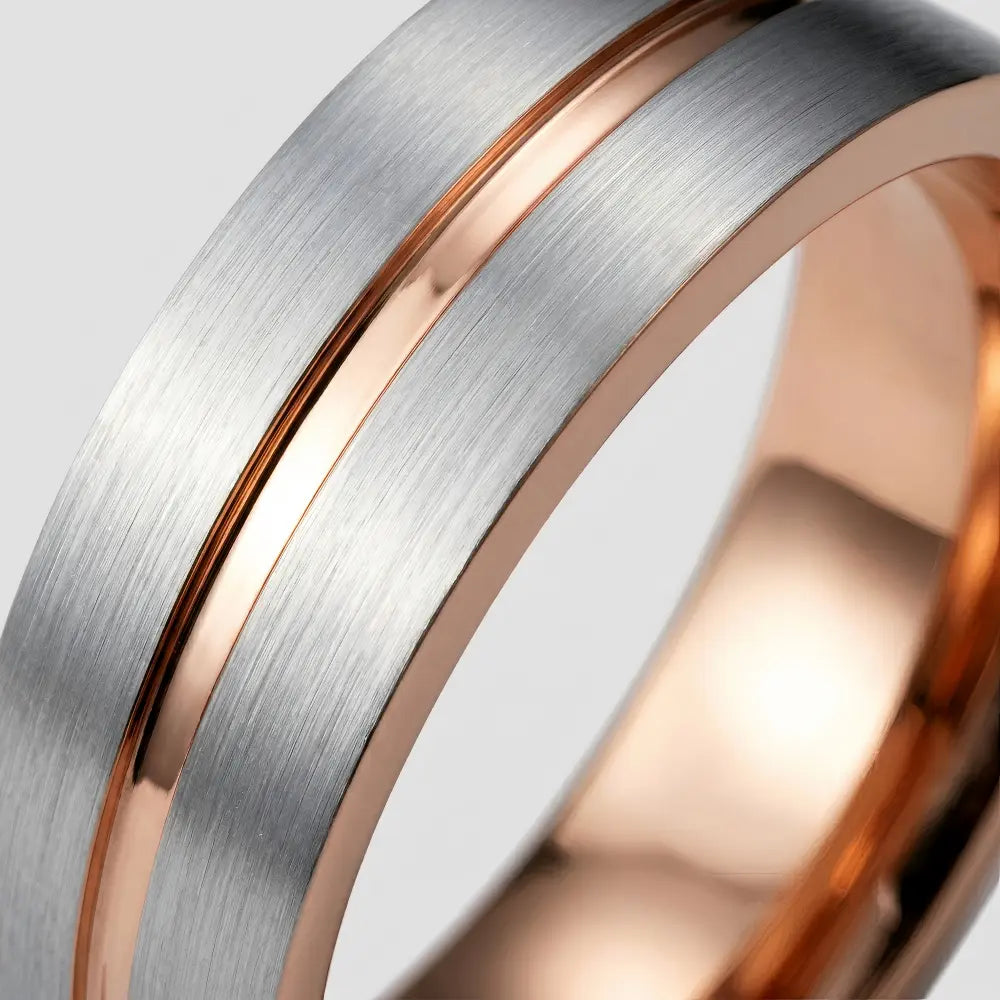
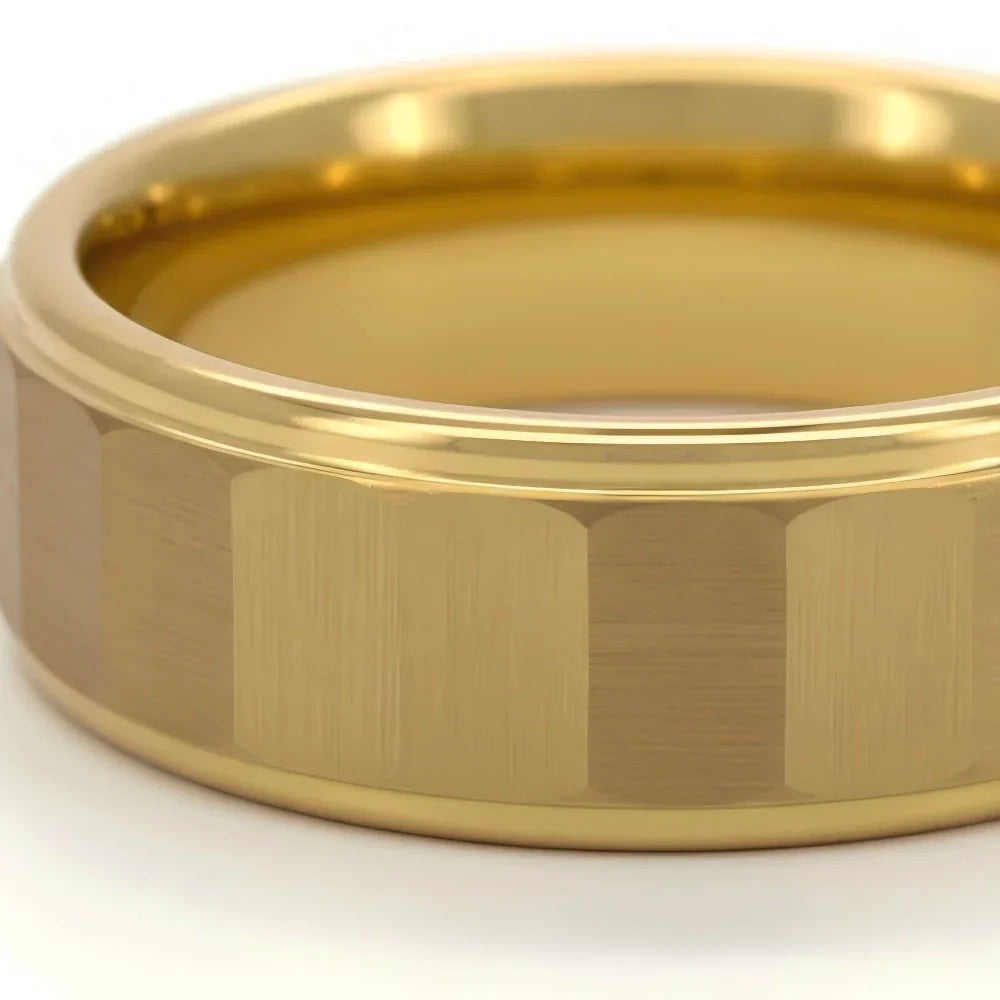
Pick the position that suits your hand and the work it does, then choose a profile that fits it. If you are starting with the middle finger or index, a monolithic profile like The Obelisk or The Shadow Monolith carries weight without ornament. The full range sits in FORTITUDE and EQUILIBRIUM.