Article: Archive Entry 023: The Biocompatible Armor – Zirconia and Molecular Bonding
Archive Entry 023: The Biocompatible Armor – Zirconia and Molecular Bonding
Archive Entry 023: The Biocompatible Armor – Zirconia and Molecular Bonding
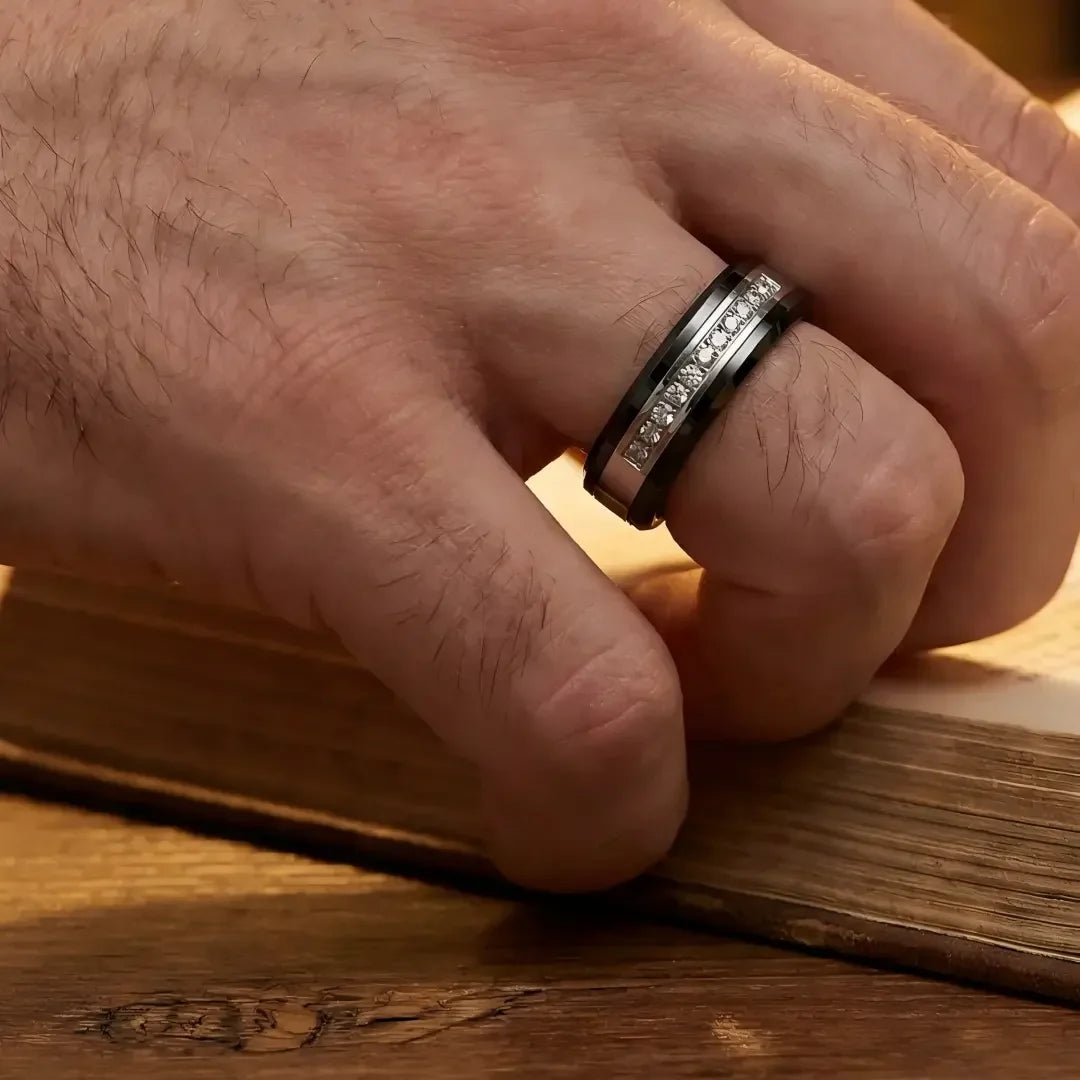
Not every operational environment permits the use of a 15.6 g/cm³ tungsten Core Matrix. For professionals in high-voltage electrical fields, or individuals with strict biological metal sensitivities, structural permanence requires a non-metallic approach. This entry outlines the engineering parameters of the hypoallergenic non-metallic structural band and the mechanics of vacuum-sealed surface interfaces.
Technical Zirconia: Polycrystalline Thermal Stability
The structural alternative to heavy metal is not a lighter, weaker alloy. It is technical zirconia ceramic. Unlike standard consumer ceramics, zirconia (ZrO2) is an industrial-grade compound engineered for aerospace insulators and high-stress mechanical bearings.
| Material Matrix | Density (g/cm³) | Mohs Hardness | Conductivity (Thermal/Electrical) | Biocompatibility |
|---|---|---|---|---|
| Technical Zirconia Ceramic | 6.0 | 8.0 - 8.5 | Absolute Zero (Insulator) | 100% Hypoallergenic (Inert) |
| Aerospace Tungsten Carbide | 15.6 | 9.0 | Moderate | High (Nickel-bound) |
| Traditional 18K Gold | 15.0 - 16.0 | 2.5 - 3.0 | High | Moderate (Alloy dependent) |
Zirconia registers at a density of 6.0 g/cm³—less than half the weight of tungsten—providing a lightweight tactile signature without sacrificing durability. Its primary engineering advantage is polycrystalline thermal stability. It does not conduct electricity, nor does it retain environmental heat. This makes a technical zirconia ceramic ring the definitive physical asset for engineers exposed to extreme thermal or electrical variables. Biologically, the material is completely inert, eliminating the risk of contact dermatitis or oxidation on the skin.
Surface Interface: 18K Gold Molecular PVD vs Electroplating
When integrating a gold or colored interface onto a high-hardness substrate (whether tungsten or zirconia), liquid chemical dips fail mechanically. The engineering standard required is Physical Vapor Deposition (PVD).
The distinction between 18K gold molecular PVD vs electroplating is strictly structural. Electroplating submerges the band in a chemical bath, resulting in a fragile, superficial layer that flakes under minimal friction. PVD vaporizes the target metal inside a vacuum chamber, forcing the ions to penetrate and bond molecularly with the substrate. This creates a high-durability barrier that resists chemical wear and daily abrasion.
All Aura Brilliant interfaces utilize vacuum ion-deposition. While the interface may develop Chronos Evolution (micro-wear) over decades of hard utility, the underlying Core Matrix remains uncompromising. For any catastrophic structural failures due to accidental impact, the integrity of your asset is backed entirely by the Aura Resilience Guarantee.
Frequently asked questions
What makes a technical zirconia ceramic ring different from standard metal rings?
Technical zirconia ceramic provides a lightweight tactile signature with a density of 6.0 g/cm³. It is engineered for polycrystalline thermal stability, meaning it is completely non-conductive (both thermally and electrically) and 100% hypoallergenic, making it the definitive structural band for sensitive biological or high-voltage environments.
Is technical zirconia ceramic scratch-resistant?
Yes. Technical zirconia is an industrial-grade compound that registers at a Mohs hardness of 8.0 to 8.5. This offers extreme durability and scratch resistance that vastly outperforms traditional alloys like 18K gold, which only registers at 2.5 to 3.0.
What is the structural difference between 18K gold molecular PVD and electroplating?
Electroplating submerges the ring in a chemical bath, resulting in a fragile, superficial layer that flakes easily. Molecular PVD (Physical Vapor Deposition) vaporizes the target metal in a vacuum, forcing ions to bond molecularly with the high-hardness substrate. This creates a permanent, high-durability barrier that resists chemical wear and daily abrasion.

